















How to care for your baby’s teeth – From the bottle to the first cavities
From the bottle to the first cavities: the right habits.
The first baby teeth (primary teeth) are as cute as they are fragile. As soon as that very first little tooth appears, new parents face a question: how do you take proper care of them? Should you brush them? At what age should your child first see the dentist? What can you do about nighttime bottles? Let’s not underestimate the importance of baby teeth: they pave the way for adult teeth and prevent plenty of problems if they stay healthy. In this article, we guide you step by step, from the bottle to possible first cavities, to help your child enjoy a healthy smile. Follow the guide, new parents, and remember: it’s never too early to get oral hygiene right!
Even before teeth: a clean mouth from birth
Surprise – oral hygiene starts before the teeth arrive! Even without teeth, your baby benefits from care:
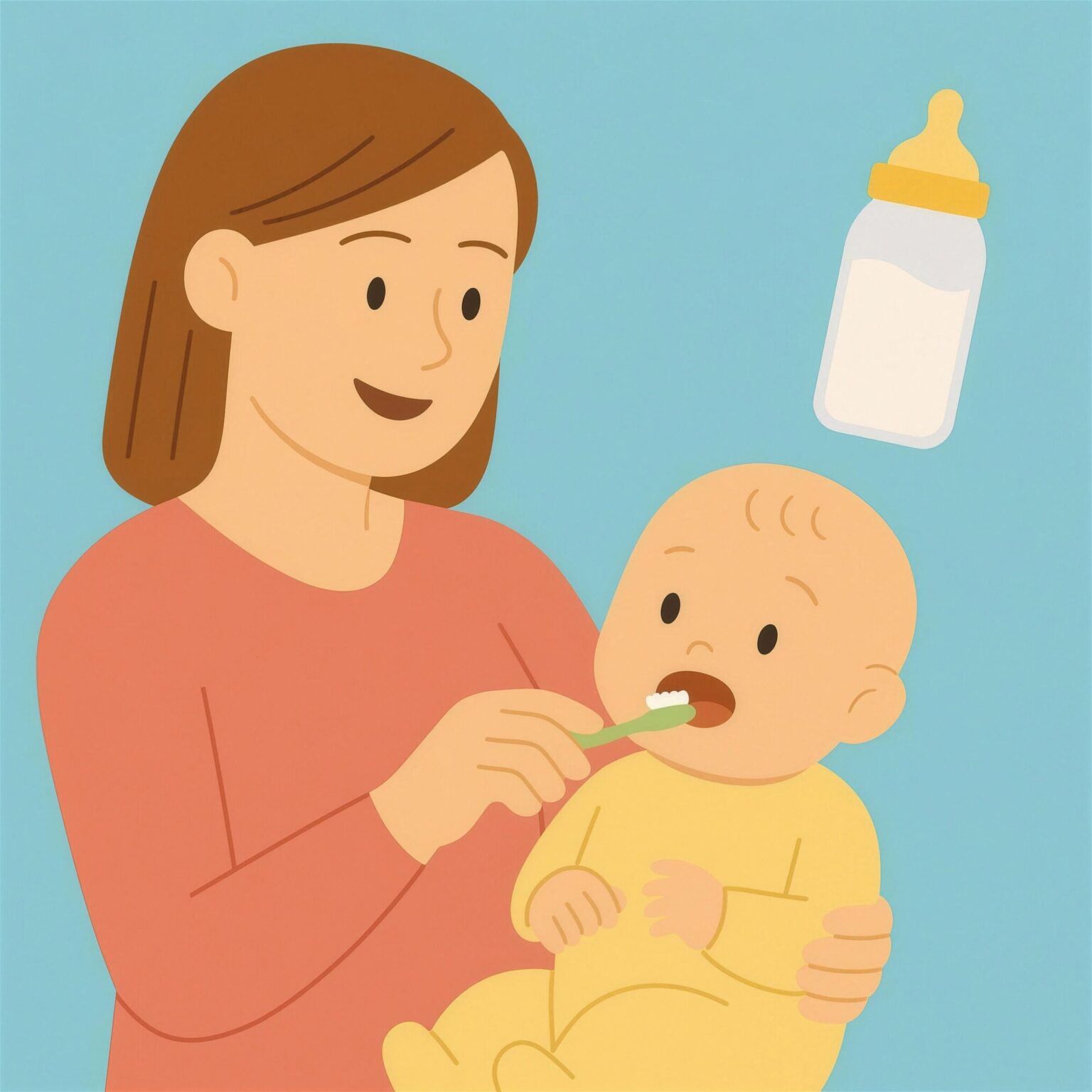
- Clean gums : From 3–4 months, you can clean your baby’s gums with a damp gauze pad or a silicone finger brush after feedings. This removes milk residue and gets your baby used to the sensation. No toothpaste is needed at this stage – water is enough. This gentle routine, done once a day, also prevents curdled milk deposits on the tongue.
- Watch out for nighttime bottles : Avoid routinely letting your baby fall asleep with a bottle of milk (or worse, sugary juice) in their mouth. Milk contains lactose (a sugar) which, if it lingers, feeds bacteria. Even before teeth appear, this can coat the gums. Give the breast or bottle, then gently wipe the gums with gauze before bedtime if possible.
These first habits lay the foundation for a hygiene routine. Your baby will adapt very well, especially if it’s presented as a game or a cuddle time.
Baby teeth arrive: gentle first brushing
The baby teeth usually start coming in around 6 months for the first one (sometimes earlier, sometimes later – every child has their own pace!). As soon as the first tooth pokes through, it’s time to start brushing. Yes, really – even a single tooth deserves to be brushed 😁. How do you go about it?
- A special baby toothbrush : Get a toothbrush designed for little ones, with a small head and ultra-soft bristles. Some come with a safety ring to keep your baby from pushing it in too far. At first, it’s mainly the parent who brushes, not the child on their own.
- Suitable fluoride toothpaste : Use a children’s toothpaste low in fluoride (around 500 ppm) until your child can spit, since they’ll swallow it. Apply a tiny amount – the equivalent of a grain of rice on the brush is enough. Fluoride strengthens the new enamel of baby teeth, which is important, but we use very little to avoid overexposure if it’s swallowed.
- Technique : Sit your baby on your lap with their head against you, or in front of a mirror if they can stand with help. Gently brush the tooth, without forgetting the gumline. At first, once a day in the evening is already good. When several teeth have come in, move to twice a day (morning and evening).
Brushing should stay fun. Sing a little 2-minute song, use a fun sand timer, get a favorite stuffed animal involved that “brushes its teeth too”… The idea is for your child to associate it with a fun ritual, not a chore. Don’t get discouraged if your baby chews the brush more than they brush – what matters is establishing the routine. Little by little, they’ll let you brush more effectively.
Baby bottle syndrome: watch out for early cavities
A well-known pitfall for pediatric dentists is baby bottle tooth decay. It occurs in very young children (1 to 3 years old) who regularly drink sugary liquids from a bottle (formula, juice, syrups), especially at night. The front teeth, constantly bathed in sugar, develop rapidly progressing cavities. The result: blackened, decayed baby teeth as early as age 2.
How can you prevent it? A few tips:
- Don’t let your child fall asleep with a bottle of sugary liquid in their mouth. If they need to suck to fall asleep, choose a pacifier (and even then, wean early) or water in the bottle.
- From age 1, teach your child to drink sugary liquids from a cup rather than a bottle. Very frequent bottle use past this age isn’t recommended, either for the teeth or for oral development.
- If your child really does have a bottle of milk before bed, try to brush their teeth or at least give them a few sips of water afterward to rinse.
At the same time, have your little one’s teeth checked regularly. An early visit will help detect the slightest sign of a cavity and give you more prevention tips.
First dental visit: at age 2–3, let’s go
As mentioned above, it’s recommended to take your child to a pediatric dentist around their third birthday. Not for treatment, fortunately, but for a preventive exam and advice. This first visit is very gentle:
- The dentist looks inside the mouth to check that everything is normal: teeth erupting properly, no suspicious spots, healthy gums.
- They’ll ask you about diet (bottle, breastfeeding, sugar) and the oral hygiene you do at home. Feel free to mention any difficulties (e.g., “he refuses to let me brush” – we’ll help with some tricks).
- You’ll receive personalized advice. For example, using fluoride drops or toothpaste depending on the assessed cavity risk, what to do about the pacifier, and so on.
- If there’s already a small early cavity (a chalky white spot) somewhere, the dentist can apply a fluoride varnish to stop it in its tracks. It’s better to act early.
This visit is also a great way to help your child get familiar with the dental clinic. They’ll often leave with a balloon or a colorful toothbrush. That way, they won’t associate the dentist with pain, but with a fun new experience. This sets them up for a positive relationship with the dentist going forward. Studies show that children who start early have fewer dental diseases and fewer emergencies later on.
Learning to brush independently
Between ages 2 and 4, your child will want to do it “all by myself.” It’s great to let them try brushing their own teeth (with a suitable children’s fluoride toothpaste – a pea-sized amount at age 3). Let them move the brush around as best they can, for practice. But be careful : until age 6–7, children don’t have enough dexterity to brush effectively without help. So it’s essential for a parent to go over their teeth again to finish the job, especially in the evening. Make it a game: “You go first, then it’s my turn to check for hidden monsters!” That way, they won’t feel offended and will see it as a fun double brushing. Gradually, around age 6, they’ll master the right technique (brushing from the gum toward the tooth, 2 minutes…) and you can ease off on helping.
Cavities in baby teeth: should they be treated?
It’s a big question many parents ask: “It’s just a baby tooth – does it need to be treated if it has a cavity?” The answer is yes, cavities in baby teeth need to be treated. There are several reasons:
- A decayed baby tooth hurts (when the nerve is affected) just like a permanent tooth. We don’t let a child suffer while waiting for “the tooth to fall out.”
- An infection in a baby tooth can damage the developing permanent tooth underneath.
- Baby teeth hold space for the future adult teeth. If a baby tooth has to be pulled too early because of an untreated cavity, the neighboring teeth can shift and reduce the space – as a result, the adult tooth may have trouble coming in or come in crooked. It’s sometimes better to place a small filling in the baby tooth to keep it until it would normally fall out, rather than lose it prematurely.
Of course, every case is different. If the baby tooth is due to fall out on its own within a month and has a moderate cavity, we can monitor it without major intervention. But if it won’t fall out for another 3 years, it needs to be treated, with a small white composite filling or a baby tooth nerve treatment if the nerve is affected (yes, we also do “mini root canals” on baby teeth when needed, to clean out the infection and keep the tooth until it’s ready to fall out). Rest assured, children’s dentists know how to work quickly, using painless techniques adapted to little ones.
Practical tips for a cavity-free child
- Brush twice a day as soon as possible, with a children’s fluoride toothpaste. Supervise until your child brushes independently AND effectively (around age 7).
- A balanced diet : Avoid constant snacking on sweets. Choose water over sugary drinks to quench thirst. Never dip a pacifier in honey or sugar (an old habit to avoid completely).
- First dental visit around age 2–3, then every 6 months or once a year depending on the risk. These regular visits, even when everything is fine, motivate children and allow any problem to be detected quickly.
- Fluoride : Follow your dentist’s or pediatrician’s recommendations on fluoride intake (fluoridated table salt, toothpaste dosed according to age). Fluoride is a powerful ally against cavities, but the dose needs to be right for the child’s age to avoid excess (fluorosis).
- Set a good example : Children imitate. Brush your teeth as a family and make it a fun moment. If Mom and Dad take care of their teeth, your little one will want to do the same.
By following these tips, you’ll give your child every chance to keep a bright, healthy smile. Well-cared-for baby teeth will be replaced in due time by beautiful permanent teeth. And your child will have developed good hygiene and prevention habits that will serve them for life. Don’t hesitate to ask your dentist in Geneva for advice – at Aura, we love supporting families and watching our young patients grow up with healthy teeth. Raising a child takes time… and so does building a smile! 😃




Book an appointment
We give you the flexibility to schedule an appointment however you prefer, whether by calling us directly or using our online booking system.