















Dental implants
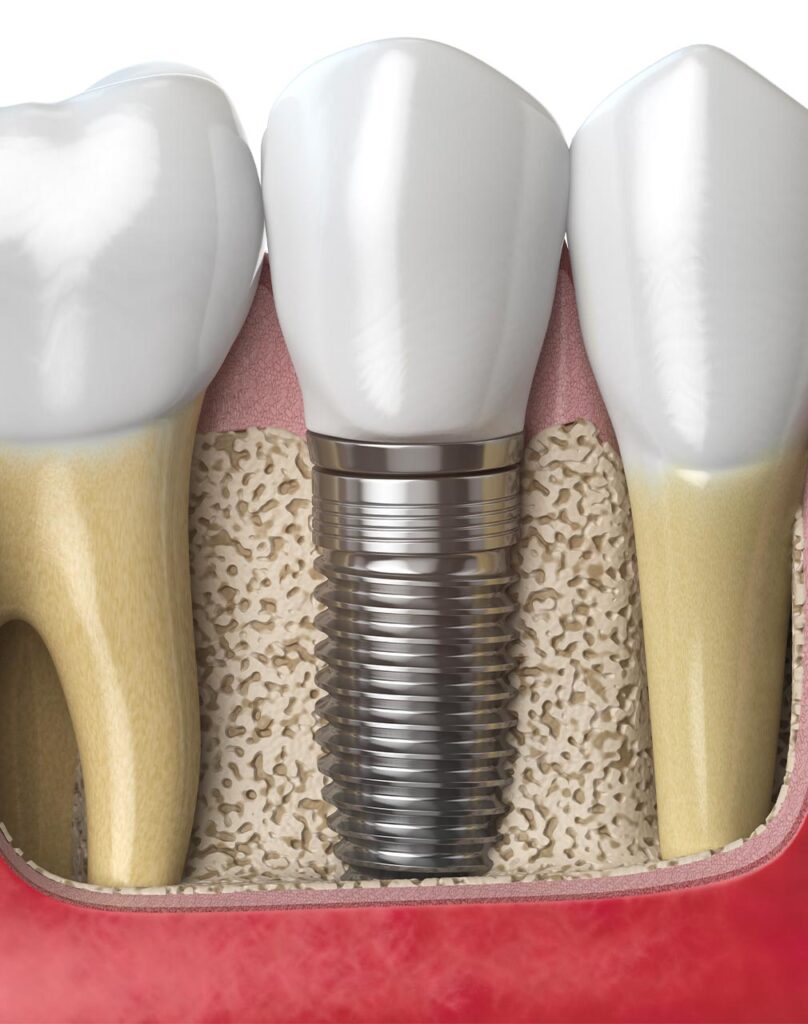
A dental implant is an artificial root, usually made of titanium, placed in the jawbone to support a crown and replace a missing tooth.




A dental implant isa smart choicefor several reasons
- Aesthetically, it anchors a tooth that looks just like a natural tooth in every way.
- Firmly anchored in the alveolar bone, an implant-supported tooth withstands stress and pressure.
- It stimulates the bone, which prevents bone loss and, over time, changes to facial structure.
- With good oral hygiene, it can last more than 20 years.
There are a few contraindications to dental implant surgery, such as insufficient bone density or taking certain medications.
Here are thestepsof dental implant placement
-
Planning
A pre-implant consultation assesses the condition of the bone and gums. X-rays and a 3D scan may be needed to plan the surgery.
-
Implant placement
Under local anesthesia, the dentist makes an incision in the gum, prepares the jawbone, and screws in the implant. A temporary prosthesis is worn during healing.
-
Osseointegration and crown
The bone heals around the implant, often within 3 to 6 months. Once healing is sufficient, the dentist attaches the crown to the implant.

A techniquethat is well masteredand safe
Implantology is a thoroughly mastered discipline with a high success rate. In the rare event of failure, the implant can usually simply be replaced. Regular checkups help keep it in good condition.



Ourfees
- Dental implant + Crown
- from 3200.-
- Scaling and cleaning for new patients, with two X-rays
- 155.-
- Check-up with a dentist
- between 80.- and 180.-
Frequently askedquestions
Have a question?
We’re happy to answer any questions you may have. Feel free to write to us or give us a call.
Is getting an implant painful?

The procedure is performed under local anesthesia and is generally painless. Temporary discomfort may follow, relieved by pain relievers.
How long does a dental implant last?

With proper oral hygiene and regular dental visits, an implant can last for decades, even a lifetime.
How do I take care of my dental implants?

Treat them like your own teeth: daily brushing, floss or interdental brushes, and regular dental visits.
What if there isn’t enough bone to place an implant?

When bone or gum volume is insufficient, a bone graft or gum graft can solve the problem before the implant is placed.
Take care of the healthof yourteeth
We are committed to making sure no one has to give up on dental care, convinced that, in today’s world, everyone should be able to look after their health and feel good about their appearance, especially their smile. Our fees are designed to be not only competitive, but also, and above all, affordable. That said, they never compromise the quality of our service, which we want to be impeccable.
All our fees