















DIY teeth whitening at home – real effectiveness, risks, and alternatives
Real effectiveness, risks, and alternatives.
The appeal of “homemade” methods for a brighter smile
Having whiter teeth without going to the dental clinic is a dream for many people. Between old home remedies found online (baking soda, lemon, activated charcoal, etc.) and whitening kits sold on the internet, DIY (Do It Yourself) whitening at home is more popular than ever. After all, why pay for treatment at a dentist in Geneva if you can get a celebrity smile on your own in your bathroom? But what’s the real story? Do these homemade methods work, and more importantly, are they dangerous for your teeth? Let’s take an objective (and caring!) look at “homemade” whitening, then review the recommended alternatives for a whiter smile, safely.
Home whitening methods: do they really work?
Before judging how effective they are, let’s list the main home teeth whitening techniques out there:
- Natural “homemade” remedies : brushing your teeth with baking soda, lemon juice, activated charcoal powder, etc. These tricks are all the buzz on social media.
- Over-the-counter whitening kits : gel-coated whitening strips, applicator pens, prefabricated trays with whitening gel and a mini LED light, abrasive “whitening” toothpastes, etc. They can be found in stores or online and promise to lighten your teeth by several shades.
What should we make of them? First of all, it’s important to understand that the natural color of teeth varies from person to person and is not pure white. Teeth can be ivory, yellowish, and so on, and they turn slightly yellower with age. Charcoal toothpastes or powders, for example, cannot change the internal color of the tooth. They only remove surface stains (coffee, tea, tobacco) by “scrubbing” the enamel, often abrasively. The result: your teeth may feel slightly cleaner, but there is no deep whitening. What’s more, regular use of activated charcoal can wear down enamel and make teeth look yellower over time (because the yellowish dentin underneath shows through).
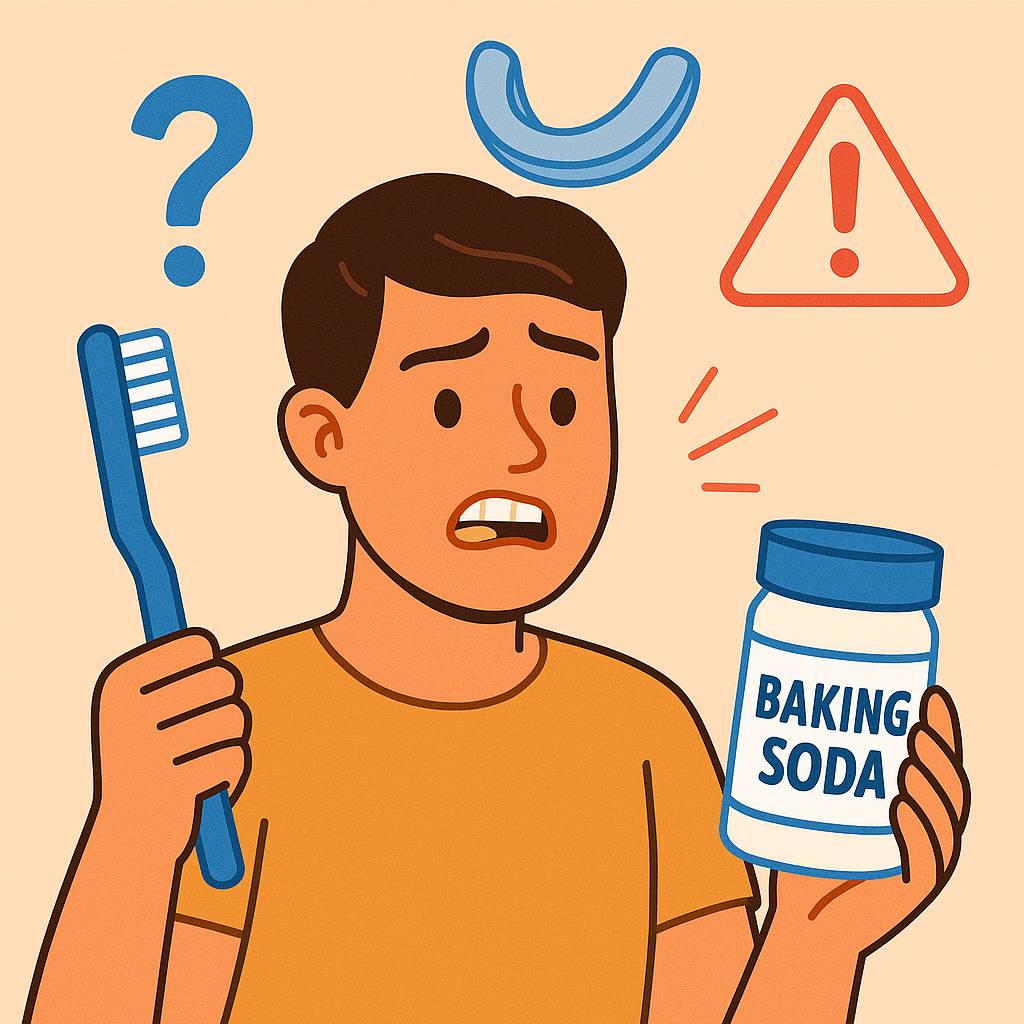
The baking soda, for its part, has a mildly abrasive effect that can help remove some surface stains. However, it has no chemical whitening effect on the internal shade of the tooth. Used too often or too vigorously, baking soda can erode enamel and irritate the gums. lemon juice or vinegar give a misleading “whitening” effect by temporarily stripping the enamel with their acidity, but they severely weaken the teeth. Enamel attacked by acid becomes porous and duller, and paradoxically more prone to staining afterward. They can also cause marked tooth sensitivity.
As for store-bought whitening kits (strips, do-it-yourself gels), their effectiveness is moderate. The reason is simple: in Europe, the law strictly limits the concentration of hydrogen peroxide in products available to the general public. The maximum dose allowed over the counter is 0.1% hydrogen peroxide, which is too low for visible whitening. Only dentists can use more concentrated gels (up to 6% peroxide) during supervised treatments. As a result, many “miracle” kits get around the law by being sold from abroad or online with no guarantees, or rely on less effective alternative ingredients. In the end, there is often little or no change in shade – at best, a slight, temporary lightening.
In summary, DIY methods can at most remove some surface stains and make teeth look a little cleaner. But lightening your teeth by several shades for the long term is nearly impossible on your own with approved consumer products – or else it comes at considerable risk to your teeth.
The risks of “DIY” teeth whitening
While the effectiveness isn’t really there, the risks, on the other hand, are very real:
- Enamel erosion and wear : Acidic substances like lemon or vinegar “eat away” at enamel. Abrasive powders like charcoal, or heavy use of baking soda, “sand down” enamel. Thinned enamel doesn’t grow back; once it’s worn, your teeth will be permanently more vulnerable (increased sensitivity, higher risk of cavities). Overly worn enamel also lets the yellow dentin underneath show through, which leads to the opposite of the desired effect.
- Irritation of the gums and soft tissues : Applying harsh products yourself means risking contact with your gums or lips. Improperly dosed peroxide or a strong acid can cause chemical burns to the gums. Many kit users report gum pain or inflammation. Not to mention the unpleasant taste and the risk of swallowing a toxic product while handling it at home.
- Uneven results and blotches : Poor technique (for example, applying whitening gel unevenly on the tooth) can leave some areas whiter than others, giving an unattractive mottled look. Likewise, whitening teeth that have cavities or cracks that haven’t been treated can let the product seep into these lesions and cause sharp pain.
- Ignoring contraindications : People aren’t always aware that whitening is not recommended in certain situations (pregnancy, very sensitive teeth, active gum disease, many fillings or crowns – since these don’t whiten). At home, these precautions can easily be overlooked, at the expense of your oral health.
- A false sense of security : Let’s say your DIY method lightens your teeth a little. This effect is often superficial and doesn’t last. You might be tempted to repeat it often, increasing the damage to your enamel over the long term. As one of our dentists sums it up: the effectiveness of these methods is highly questionable, and the risk of permanent damage far outweighs the benefits.
What safe, recommended alternatives are there for whitening your teeth?
Fortunately, there are effective solutions for a whiter smile, supervised by professionals, that help you avoid these pitfalls.
- Professional in-office teeth whitening – This is the fastest method. The dentist applies a concentrated hydrogen peroxide gel to your teeth and carefully protects your gums. A special light is often used to activate the product and speed up the process. In about an hour, teeth can be lightened by several shades. The benefit? The treatment is under medical supervision, tailored to your situation, and your tissues are protected. At Aura, your dental clinic in Geneva, for example, whitening is performed in a safe, comfortable setting with professional-grade materials.
- Dentist-supervised at-home whitening – This is a very popular and effective option. The practitioner makes custom-made trays for your teeth (from impressions or a digital scan). You are then given a moderate-strength whitening gel to apply in the trays, along with a precise protocol (for example, wearing the trays for half an hour a day or overnight, for 10 to 15 days). This at-home method delivers gradual but very satisfying results, comparable to in-office whitening over the long term. The advantage is that you control the intensity, stopping once you are happy with the shade. And everything is done under your dentist’s supervision: if you experience sensitivity, the treatment can be adjusted (for example, by spacing out applications or using a desensitizing gel).
- Professional cleaning and polishing – Sometimes teeth look yellow because of tartar buildup or surface stains (coffee, tea, tobacco). A scaling and cleaning followed by polishing with the dental hygienist can already restore your smile’s brightness. This cleaning is often recommended before any whitening, so you start from a healthy base and get the best possible result.
- Dental veneers or other cosmetic options – If your teeth have stubborn internal stains (fluorosis, tetracycline stains) or alignment or color issues that conventional whitening cannot correct, ceramic dental veneers may be considered. This is a more costly and invasive solution, best reserved for specific cases (we’ll cover it in an upcoming article). Other options, such as cosmetic tooth reshaping or orthodontics, can also help create a more beautiful smile without putting your dental health at risk.
(And of course) Good oral hygiene – Sometimes, a change in habits may be enough: quitting smoking (which yellows teeth), cutting back on coffee and tea, and using a whitening toothpaste for maintenance (in moderation, so as not to wear down enamel). These maintenance steps help keep your smile brighter after professional whitening and delay the need to repeat it too often.
Conclusion: Don’t take unnecessary risks with your teeth
Our teeth are precious and priceless… except, perhaps, for the price of our carelessness! It’s understandable to want a whiter smile, but beware of seemingly good ideas found online. DIY teeth whitening promises the moon, but the reality is often disappointing in terms of effectiveness, and potentially disastrous for your dental health. Before trying a risky hack, remember that damage to enamel is irreversible. It’s far better to turn to proven methods.
Feel free to discuss your whitening goals with your dentist in Geneva. Together, you’ll find the most suitable solution: a thorough cleaning, professional whitening, or perhaps the discovery that your teeth are already great just as they are! Whatever the case, put safety and professional advice first to keep your smile shining bright.




Book an appointment
We give you the flexibility to schedule an appointment however you prefer, whether by calling us directly or using our online booking system.