















Complete and partial dentures – types, indications, steps, pros and cons
Types, steps, benefits, and limitations.
What are removable dentures?
When one or more teeth are missing, there are several ways to restore your smile and chewing function. Aside from fixed solutions such as implants or dental bridges, a common and more affordable option is a removable denture, commonly called dentures when it replaces all the teeth. There are two main types:
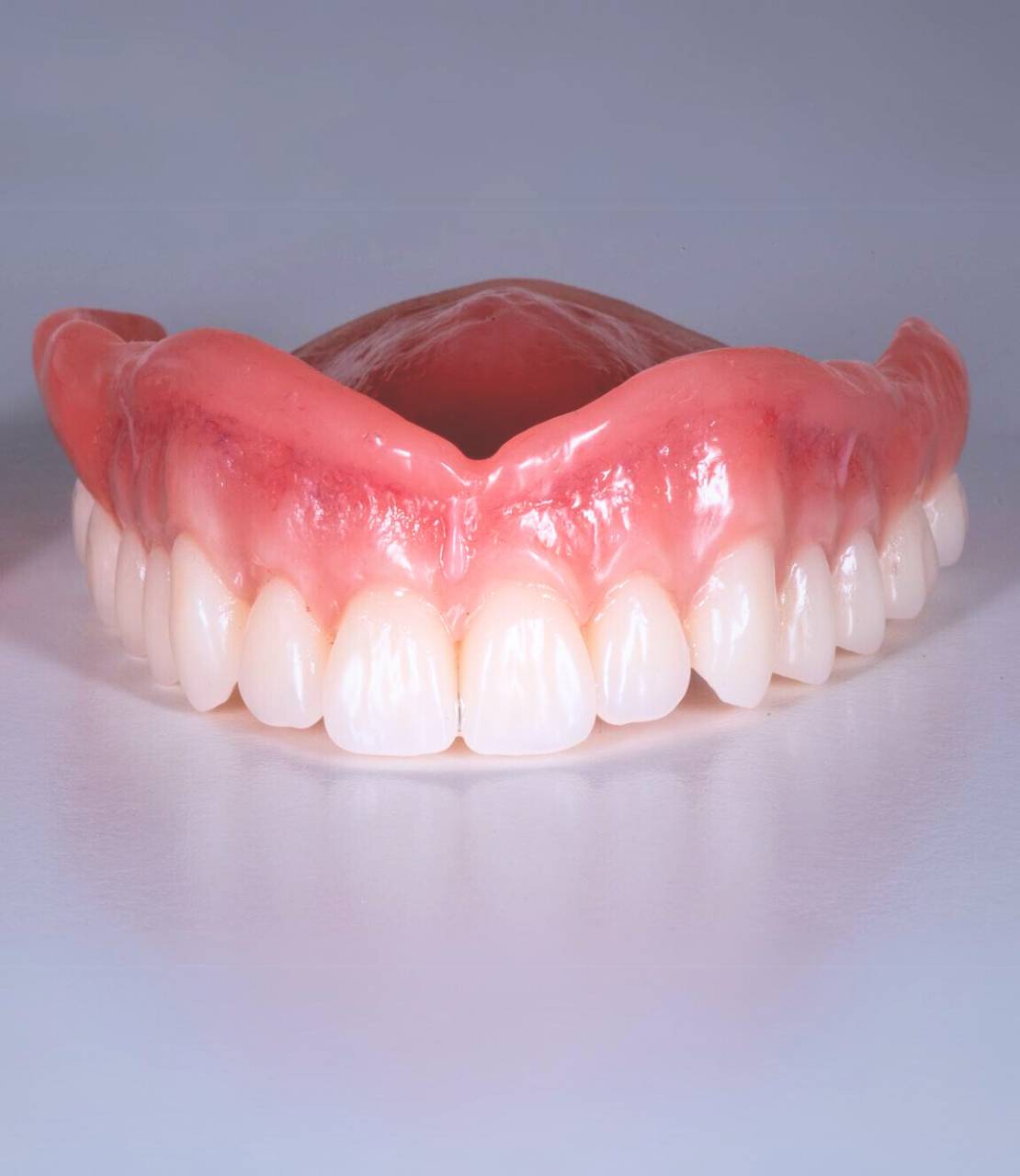
- The latest complete denture (full denture), which replaces all the teeth in one jaw.
- The latest partial denture (removable), which replaces only some missing teeth by resting on the remaining natural teeth.
These dentures are custom-made for each patient and can be taken out and put back in at will (for cleaning, for example). Let’s look at the differences between partial and complete dentures, when each is recommended, how they are made and fitted, and their respective pros and cons.
Partial vs. complete denture: what are the differences and indications?
Making complete denture is recommended when all the teeth in an arch (upper or lower jaw) are missing. It replaces all 14 teeth (excluding wisdom teeth) of a toothless jaw. By contrast, a partial denture is used when there are still natural teeth remaining and only a few teeth need to be replaced (one, several, or even most but not all). A partial denture fills the gaps while coexisting with the existing teeth.
A partial denture generally has a metal or resin framework that rests:
- on the one hand, on the gums where the teeth are missing,
- and on the other hand, on some of the remaining teeth, using discreet metal clasps or special attachments.
A complete denture, on the other hand, covers the entire gum surface of the toothless jaw. For the upper jaw, it has a pink resin base that covers the palate so it stays in place by suction (an air vacuum). For the lower jaw, it is horseshoe-shaped, resting on the gums and held in place mainly by a precise fit (saliva and sometimes denture adhesive help stabilize it).
Comparison table : Here is a side-by-side summary of the features of partial and complete dentures:
| Criterion | Partial denture (removable) | Complete denture (full denture) | ||
| Assessment | Replaces one or more missing teeth (when natural teeth remain). | Replaces all the teeth in a jaw (complete tooth loss). | ||
| Retention | Rests on the gums and on the adjacent remaining teeth (via clasps or attachments on these abutment teeth). | Rests only on the gums (and the palate for the upper jaw) through natural suction or, if needed, denture adhesive cream. | ||
| Advantages | Preserves the alignment of the remaining teeth by filling the gaps.- More stable than a complete denture thanks to support from natural teeth.- Less expensive than a bridge or multiple implants. | Restores a full smile when no teeth remain.- Non-invasive placement (no surgery).- Generally the most affordable way to replace all the teeth. | ||
| Disadvantages | Clasps may be visible or trap food. Requires strong supporting teeth and excellent hygiene to prevent cavities on those teeth.- Less comfortable than a fixed solution (you can feel an appliance in your mouth). | Limited stability, especially for the lower denture, which holds less well. May require denture adhesive to improve retention.- The jawbone resorbs without teeth, so the denture may start to “float” over time and need to be readjusted. |
How is a denture made?
- Assessment and impressions – It all starts with a complete oral examination. The dentist checks the condition of any remaining teeth and the gums. Precise impressions (molds) are taken of the toothless jaw and the opposing jaw. These impressions serve as the basis for making a denture that fits your anatomy perfectly.
- Bite registration – The dentist measures how your upper and lower jaws come together (this is called the occlusion, or bite). For a complete denture, the bite height and the position of the lower jaw relative to the upper jaw must also be determined. The dentist will often use wax bite rims (wax blocks that you bite into) to simulate the future denture and record these relationships.
- Try-in appointments – The dental technician (in the laboratory) creates a first model of the denture. For a complete denture, this may be a try-in with the artificial teeth set in a wax base. The esthetics (tooth shape and shade, lip support) and the accuracy of the bite are then checked. Adjustments can be made at this stage by reshaping the wax.
- Delivery of the denture – Once the try-ins are approved, the final version of the denture is made (the wax is replaced with permanent resin, the artificial teeth are polished, etc.). The dentist then places the denture in the patient’s mouth and checks the fit. They also explain how to care for it.
- Follow-up and adjustments – It’s normal to need a few adjustments after the denture is fitted. The dentist can smooth down areas that irritate the gums or improve the balance if the denture rocks slightly. A follow-up is usually scheduled after a few days and then after a few weeks. Once properly adjusted, the denture can be worn every day without pain.
Living with a denture: adjustment and care
Getting used to a new denture takes a little patience. At first, your mouth may feel unusually full, you may produce more saliva, or you may have some difficulty pronouncing certain words (especially with a complete upper denture that covers the palate). These discomforts generally fade within a few days to a few weeks as your tongue and facial muscles adapt.
Daily care : Whether partial or complete, a denture needs thorough cleaning every day:
- Brushing the denture : After every meal if possible, or at least once a day, remove the denture and brush it with a dedicated toothbrush (or a special denture brush) and mild soap.
- Oral hygiene : Don’t forget to also brush your remaining natural teeth (with a partial denture) as well as your gums, tongue, and palate. This stimulates blood circulation and prevents plaque or fungus from building up on the soft tissues.
- Nighttime rest : It’s often recommended to remove your denture at night to let the tissues in your mouth rest. If you don’t feel comfortable sleeping without your teeth, try at least to take it out for a few hours each day. In any case, never wear a denture 24/7 without cleaning it.
Storage : When you’re not wearing it, keep your denture in a clean, dry case. Contrary to popular belief, you don’t have to soak it in water or a solution overnight – unless your dentist advises otherwise. However, occasional effervescent cleaning soaks (tablets for dental appliances) can help disinfect it and remove stains.
Lifespan and replacement
A removable denture isn’t designed to last forever. Over time, the shape of your jaw changes: the bone and gums tend to gradually resorb (shrink) when natural teeth are missing. As a result, a denture that once fit well may start to “float” or move after a few years. In general, a denture should be replaced or relined (adjusted) every 5 to 7 years to stay comfortable. Of course, this depends on each person and on how worn the denture is.
Signs that it’s time to remake or adjust your denture:
- You need more and more adhesive to keep it in place.
- You often have irritation or sores on your gums.
- Your jaws seem to “sink” and the appearance of your lower face has changed (lips that fold slightly inward).
- The denture is cracked or broken, or the artificial teeth are very worn.
Don’t wait until you’re in serious discomfort. An annual check-up with your dentist in Geneva will make it possible to monitor the condition of your denture. The dentist may suggest a reline (adding resin to the inside of the denture to fill the space left by gum shrinkage) or a complete replacement of the denture if necessary.
Pros and cons at a glance
In short, removable dentures offer a relatively affordable and quick way to replace missing teeth:
- The complete dentures restore an acceptable smile and chewing function for people who have lost all their teeth. They are removable, which makes cleaning easier, and they don’t require surgery. On the other hand, they aren’t as stable as fixed teeth: you have to learn to eat with them (cutting food into small pieces, avoiding foods that are too sticky or hard) and accept taking them out at night.
- The partial dentures fill the gaps while preserving the remaining healthy teeth. They prevent these teeth from shifting and improve chewing. However, they require enough strong abutment teeth, and you need to be very diligent about keeping those supporting teeth clean.
Every case is unique: your dentist will guide you toward the most suitable type of denture based on the number of missing teeth, the health of your gums and remaining teeth, your budget, and your expectations. In some cases, they may even suggest combined solutions (for example, a removable denture stabilized by dental implants for better retention).
Conclusion: Regain your smile with peace of mind
Wearing a denture, whether partial or complete, is a big but positive step toward regaining comfort and self-confidence. The first few weeks require some adjustment, but soon smiling and eating will feel natural again. Don’t hesitate to ask your dentist questions when your denture is delivered: how to put it in, how to take it out, which products to use, and so on. The better informed you are, the more at ease you’ll feel.
At Aura, our dental clinic in Geneva, we support our patients at every step of the process – from choosing the type of denture to post-fitting adjustments – so you can go through this transition with peace of mind. With well-designed dentures and good follow-up care, you’ll soon forget they’re even there and fully enjoy life with your new smile!



Book an appointment
We give you the flexibility to schedule an appointment however you prefer, whether by calling us directly or using our online booking system.