












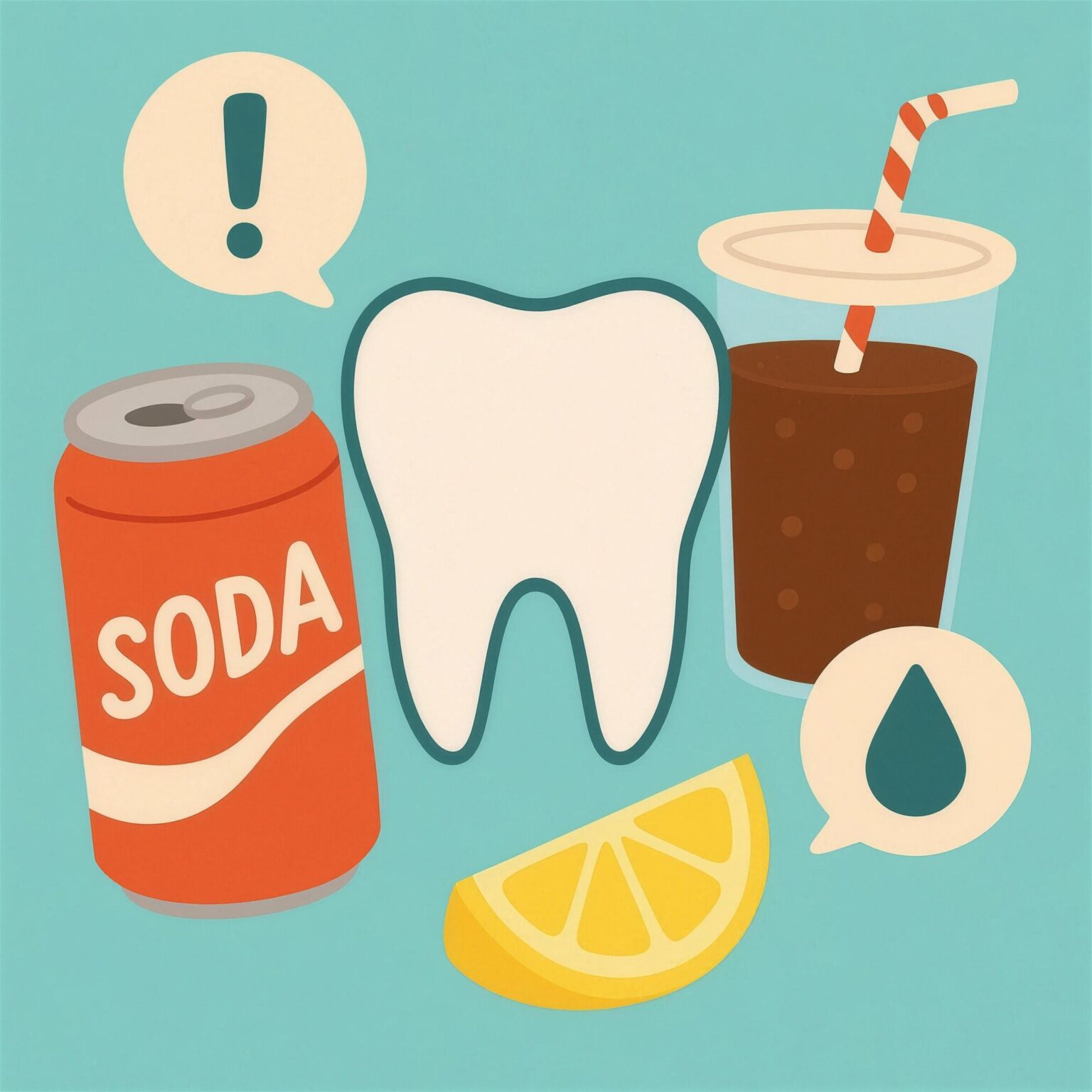
Acids, soda, lemon: the hidden everyday enemies of your teeth
The habits that quietly weaken your enamel.
Did you know that some seemingly harmless foods and drinks are formidable enemies of your teeth ? Of course, we think of candy and sweets when it comes to cavities, but there’s a more insidious danger: acidity. Every day, products like soda, lemon juice, or vinegar quietly attack your tooth enamel. They’re acidic, and acid is the sworn enemy of enamel, which it can dissolve little by little. In this article, we’ll identify these invisible enemies, explain how they damage your teeth, and above all how to protect yourself. Let’s get equipped to keep your smile healthy!
Why is acidity bad for our teeth?
Today,tooth enamel is the hard outer layer that protects your teeth. Although it’s the hardest substance in the human body, it has a weak spot: acidity. When the pH in your mouth drops below about 5,5, enamel begins to demineralize (dissolve). And many of the things we consume have a very low pH (meaning they’re acidic). For example:
- A regular soda (cola, orange soda) has a pH of around 2.5 to 3.5, well below the critical threshold of 5.5.
- Pure lemon juice is around pH 2 ! It’s one of the most acidic juices.
- Sugar-free “diet” drinks are still acidic too (the risk of cavities is lower since there’s no sugar, but the risk of acid erosion remains).
- Salad dressings (vinegar), white wine, certain fruits like grapefruit, etc., are also very acidic.
When you drink a soda or bite into a lemon, the acid directly attacks the surface of your teeth. This is called dental erosion (not to be confused with cavities, which are caused by bacteria + sugar). Erosion thins the enamel across the entire tooth surface. Over time, your teeth can become more yellow (because thinner enamel lets the yellowish dentin underneath show through) and more sensitive (cold and heat cause pain). The edges of the front teeth can become translucent. With severe erosion, teeth wear down, get shorter, and also become more vulnerable to cavities. Not great, right?
The terrible trio: sodas, energy drinks, and acidic fruit juices
- Sodas and colas : They often deliver a double whammy – sugar + acid. Sugar feeds cavity-causing bacteria, and acid (phosphoric or citric acid in cola) attacks the enamel. Even a sugar-free diet soda is still loaded with acid. Rinsing your mouth with water after a soda can help neutralize it a bit, but the best approach is to limit how much you drink.
- Energy and sports drinks : Many of them are also very acidic (for preservation and taste). We’ve seen athletic teenagers with dental erosion caused by frequent isotonic drinks. Enjoy them in moderation, and choose water to stay hydrated during exercise – your teeth will thank you.
- Acidic fruit juices : Orange juice, grapefruit juice, homemade lemonade… They’re full of vitamins for your body, but an assault on your teeth if you sip them all day long. Be careful: freshly squeezed lemon juice taken straight on an empty stomach in the morning, a popular detox trend, can harm your enamel day after day. Always dilute it in water.
Other unsuspected acidic enemies
- Vinegar (and marinades) : love pickles or vinegar-based condiments? They’re soaked in acetic acid, which is highly erosive to enamel. In reasonable amounts they’re fine, but avoid snacking on them too often.
- Wine : White wine is particularly acidic (pH ~3–3.5). Red wine is slightly less so but contains tannins that can stain teeth. One more good reason to enjoy wine in moderation.
- Some bottled iced teas : Very sweet but also acidified for preservation. Don’t sip them constantly.
- Citrus fruits in general : Kiwi, pineapple, orange – they provide vitamin C and enjoyment, so there’s no need to give them up entirely! But avoid keeping them in your mouth for too long. For example, eating a grapefruit in segments is better than squeezing it into pure juice and sipping it slowly.
- Effervescent medications : Effervescent vitamin C, effervescent aspirin… These tablets are acidic by nature (citric acid). If you take them daily, remember to drink some water afterward to rinse away the leftover acidity in your mouth.
How can you protect yourself from acid erosion?
Fortunately, there are simple habits to help counter acid attacks :
- Limit how often you’re exposed : It’s not the occasional soda that will ruin your teeth, it’s sipping it all day long. Try to have acidic foods and drinks with a meal. For example, drink your orange juice during breakfast rather than between meals, so the saliva produced while eating helps neutralize the acid.
Stimulate saliva : Saliva is our best anti-acid ally because it contains natural bicarbonates that raise the pH. After having something acidic, you can chew some gum that’s sugar-free for 5-10 minutes. This will increase saliva flow and neutralize acidity faster.
- Use a fluoride toothpaste that strengthens enamel : Some toothpastes and gels contain sodium fluoride and calcium, which help remineralize damaged enamel. For example, fluoride binds to enamel to form a more acid-resistant layer. Feel free to ask your dentist for a remineralizing product if you have signs of erosion (there are special gels to apply in the evening).
- Drink water! : It sounds obvious, but alternating sips of soda or juice with water, or finishing your meal with a glass of water, will dilute the acids. Tap water often contains a little fluoride and calcium too, so it’s “protective.”
The damage is done… what now?
If you already notice signs of erosion (sensitive teeth, thin or translucent edges on your front teeth, small yellowish dips on the tops of your molars), don’t panic. Mention it at your next appointment. Depending on how advanced it is, we can:
- Strengthen your teeth : in-clinic fluoride varnish, a prescription high-fluoride toothpaste, personalized advice. This can halt progression and reduce sensitivity.
- Repair worn areas : If the enamel is really too far gone in certain spots, we can fill them with tooth-colored composite resin (like a small cosmetic filling) to protect the exposed dentin. On worn incisal edges, we can also offer ceramic veneers to restore lost length and protect the tooth over the long term.
- Protect at night : Sometimes nighttime acid reflux or bruxism (teeth grinding) makes erosion worse. A custom night guard can protect tooth surfaces in these cases.
Every situation has a solution. The key is to become aware of these invisible enemies, everyday acids, and to change a few habits to keep them in check. Your teeth are strong, but they’re not invincible – so it’s best not to bathe them in acid too often.
In conclusion, let’s remember that it’s all about balance. You can absolutely have a soda now and then or love your morning grapefruit – just do it knowingly, with the right protective habits. Your teeth will be with you for life, so let’s take care of them against their small everyday enemies!


Book an appointment
We give you the flexibility to schedule an appointment however you prefer, whether by calling us directly or using our online booking system.