









Dental veneers: who they’re for, why, and how much they cost (without the Instagram clichés)
Who they’re for, why, and how much, without the clichés.
The dental veneers showcased on Instagram and social media, with those ultra-white, perfectly aligned smiles worthy of reality TV stars, are the stuff of dreams. But between filters and clichés, it’s hard to know what’s really true. Who are veneers right for? What results can you expect (realistic ones, without the over-whitened “fake teeth” look)? And of course, how much do they cost in real life, without the product placements? In this article, we offer an honest overview of dental veneers to demystify this cosmetic treatment. You’ll see that it’s a wonderful way to love your smile again, as long as you understand its indications and limits. So let’s set the Instagram clichés aside and get real about veneers!
What are dental veneers and what can they correct?
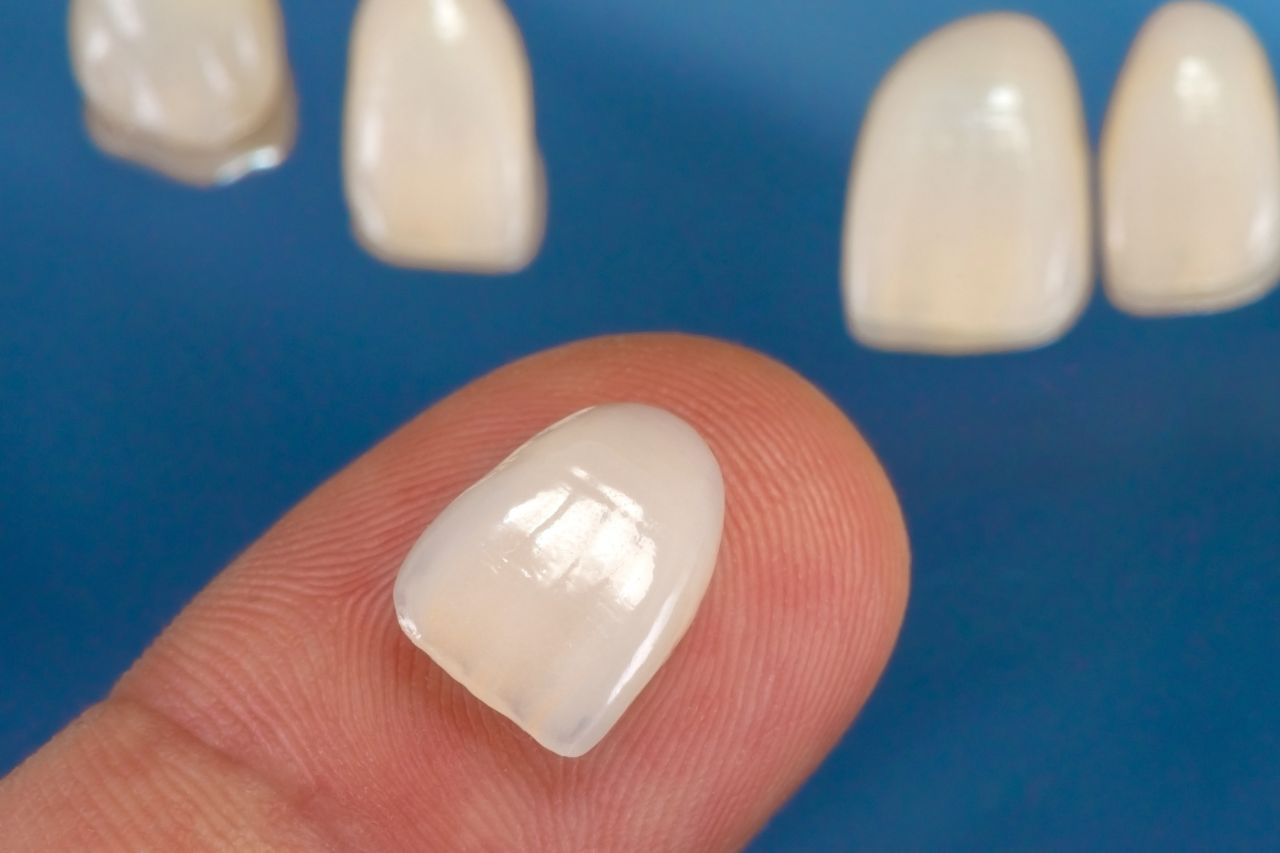
Making dental veneer is a thin shell, usually made of ultra-strong ceramic, bonded to the visible surface of the tooth (mainly the front teeth). It changes the color, shape, or apparent position of the tooth without having to crown it completely. In short, it’s a custom-made “permanent varnish” for your teeth.
What veneers can correct:
- The Stained teeth or discoloration that whitening alone can’t lighten (fluorosis, antibiotic stains…). A veneer provides a bright, stable white.
- The Cone-shaped, undersized, or gapped teeth (diastemas). Veneers can widen teeth or harmonize their shape to close a gap and create the illusion of broader teeth.
- The Slight crowding or misalignment. If your front teeth aren’t perfectly aligned but you don’t want orthodontics, we can “cheat” by reshaping them slightly and placing straight veneers. Note that this is for mild cases only – a severely rotated tooth can’t be “corrected” with a veneer alone, as it would require removing too much tooth structure.
- The Wear or cracks : if the edges of your incisors are chipped or uneven, or a tooth has a slight crack, the veneer will conceal all of that and reinforce the structure.
- The Cosmetic issues of shape: teeth that are too short, canines that are too pointed, incisors with chipped corners… the veneer redraws an ideal outline.
What veneers can’t (or shouldn’t) do:
- Replace major orthodontic treatment. If your teeth overlap significantly, it’s better to align them first. Bonding veneers after heavily reshaping very crooked teeth isn’t recommended – too much healthy tooth structure would be sacrificed.
- Turn very dark teeth “Hollywood” white without looking artificial. We can lighten them, yes, but within certain limits so they still look natural next to your complexion and your other teeth.
- Solve functional problems: if your bite is off (e.g., open bite, severe deep bite), veneers alone won’t fix it and may even break under the wrong contacts. Sometimes they need to be combined with other treatments.
Simply put, veneers are ideal for enhancing a smile with several small imperfections, in someone who already has good overall oral health.
The process: custom-made artistry
Getting veneers is a small project in itself. Here’s how it usually works:
- Assessment and planning : Your dentist first assesses whether your teeth are suitable for veneers (healthy gums, enough enamel, stable bite). We discuss your specific cosmetic expectations: desired shade, shape (for example, keep a slight signature gap or close everything?), and so on. Often, we create a wax-up (a wax or digital preview) of the planned result.
- Tooth preparation : Contrary to popular belief, we don’t grind your teeth down into “pen caps” as you sometimes see on social media (those shocking images usually show crowns, not veneers). For veneers, we remove a very thin layer of enamel from the front surface, around 0.3 to 0.7 mm, depending on what needs correcting. Sometimes, with newer no-preparation techniques, we don’t need to reshape the teeth at all (“no-prep” veneers), but only if the situation allows it (teeth already set slightly back, etc.). Don’t worry: this step is done under local anesthesia if needed, and it’s painless. We then take an impression of your prepared teeth.
- Temporary veneers : If many visible teeth are involved, we can place temporary resin veneers while the permanent ones are being made, so you don’t leave with bare teeth. They won’t look as good but protect your teeth in the meantime.
- Laboratory fabrication : The dental technician, much like a master jeweler, crafts your ceramic veneers based on the impression and the shade/shape instructions. It’s meticulous work that usually takes about 1 week.
- Try-in and placement : At the placement appointment, we first try the veneers on your teeth without bonding to check that everything is perfect (color, fit, appearance). If all is well, we move on to permanent bonding. We use an ultra-strong composite adhesive that bonds the veneer to the enamel. It’s a delicate procedure, but once bonded, the veneers become one with the tooth. A quick light-curing (blue light) and that’s it – they’re set. We do the finishing touches and adjust the contact points and bite if needed. And you leave with your new smile!
Discomfort and side effects : getting veneers is fairly minimally invasive. After preparation, your teeth may be a little sensitive for a few days, but once the veneers are bonded, that sensitivity goes away. Your gums may be slightly irritated at first, but they’ll quickly settle around the new shapes. We’ll give you cleaning tips (floss, interdental brushes), because you’ll need to be just as careful with your oral hygiene as before – a veneer doesn’t prevent decay on the rest of the tooth!
What results can you expect? A beautiful… natural smile!
A well-executed veneer treatment aims for a smile that’s enhanced but believable. In other words, we don’t want it to be obvious that you’ve “had your teeth done.” The best compliments will be “you have a great smile,” not “where did you get your veneers?”
When it comes to color, you choose a shade with your dentist. You can go for a very light white, but we avoid the opaque “toilet-bowl” white. Modern ceramics can incorporate subtle nuances and more translucent areas at the edges that mimic natural enamel. So even with a bright white, your teeth will look like real teeth.
As for shape, we respect your facial features. For example, for a man with an angular face, we’ll avoid overly rounded corners, and so on. Everything can be customized. Feel free to bring photos of smiles you like as a reference (while staying realistic about your starting point).
The final result, when the work is done well, is a harmonious smile – straighter and whiter, but one that doesn’t look like a fake prosthesis. Unlike Instagram filters, which sometimes create a uniform, flat look, real, well-placed veneers have depth and translucency and don’t look jarring. You’ll be able to smile from ear to ear with confidence, and no one will know they aren’t “your” teeth – except you and us! 😉
Who are veneers especially suitable for?
- People with worn or damaged teeth : due to age, bruxism, etc., who want to rejuvenate their smile. Veneers restore length and cover worn areas.
- Teeth with multiple restorations : if your incisors have several composite fillings in different colors, or uneven shades, veneers unify everything.
- Gaps between teeth (diastemas) : the famous Madonna-style gap – some people love it, others are self-conscious about it. With veneers, the gap between the front teeth can be closed in the blink of an eye compared with braces.
- Misshapen or stained teeth : e.g., cone-shaped incisors (Turner’s teeth), or pronounced white/brown fluorosis stains. Here, a veneer is a cosmetic game changer.
- A clear cosmetic wish : quite simply, you don’t like your current smile and want a visible change. If your teeth are healthy but not to your liking, that’s a legitimate reason. We’ll assess with you whether it’s feasible and appropriate (sometimes simple whitening or slight alignment may be enough, depending on the case – and we’ll tell you).
On the other hand, we avoid placing veneers on very young patients (under 18–20) because their teeth and smile are still changing, and their enamel is intact – we prefer to preserve their natural tooth structure. The same goes if your oral hygiene is lacking or you have untreated gum problems: we’ll address those first before any cosmetic goals.
How much do they cost, and do they last?
Let’s talk numbers: a ceramic veneer, in a region like Geneva, costs approximately CHF 1400 to 1800 per tooth. Yes, it’s a significant budget, multiplied by the number of teeth being treated (often the 6 upper teeth from canine to canine, or even 8). Why this cost? Because it’s highly personalizedwork that requires several appointments, a high-quality laboratory, and premium materials. You’re paying for the technical skill and artistic expertise of the dentist–dental technician team.
The good news is that they last. Well-maintained veneers can easily last 10, 15 years or more. Ceramic doesn’t change color over time (unlike composites). You’ll just need to take care of them: don’t use your teeth as a bottle opener, wear a night guard if you clench your teeth while sleeping, etc., to avoid cracking them. But under normal conditions, they’re strong (bonded ceramic = high resistance).
If a veneer comes loose or breaks (rare, but possible after a hard impact), it will need to be rebonded or remade. That’s why it’s important to choose an experienced dentist from the start, to minimize these risks through optimal placement.
Is the investment worth it? It’s very personal. For someone who has always been self-conscious about their smile, regaining self-confidence thanks to veneers is priceless. Think of it as an investment in yourself that lasts more than a decade.
Beyond the clichés, a human smile first and foremost
Social media often shows rather uniform, “bling-bling” smiles after veneers or crowns. This sometimes creates a negative image (“everyone has the same opaque white teeth”). In reality, in a serious medical setting, we aim for a much more subtle and natural result. Our priority at Aura is to preserve the charm of your smile while softening what you don’t like. For example, we might decide to keep a slight difference between the two central incisors rather than making them perfect twins, so it still looks real. Or choose a “light ivory” white rather than “brilliant snow” if it better suits your complexion. In short, we avoid a one-size-fits-all look.
In conclusion, dental veneers are a wonderful option for achieving your dream smile, as long as you get them for the right reasons, with the right expectations, and in the hands of a dentist you trust. Forget the Instagram-worthy excesses and think personalized cosmetic dentistry. If you’re considering veneers in Geneva, feel free to come see us: we’ll do a complete assessment and tell you honestly whether they’re right for you, or whether a simpler solution would be enough. What matters is your smile – that you love it, and that it stays healthy and functional. All without superficial clichés, but with plenty of human warmth and expertise. 😁

Book an appointment
We give you the flexibility to schedule an appointment however you prefer, whether by calling us directly or using our online booking system.