















Wisdom tooth extraction
Wisdom teeth, or third molars, are the last teeth to come in; we recommend removing them when they cause problems.




Wisdom tooth extraction isnecessaryin several cases
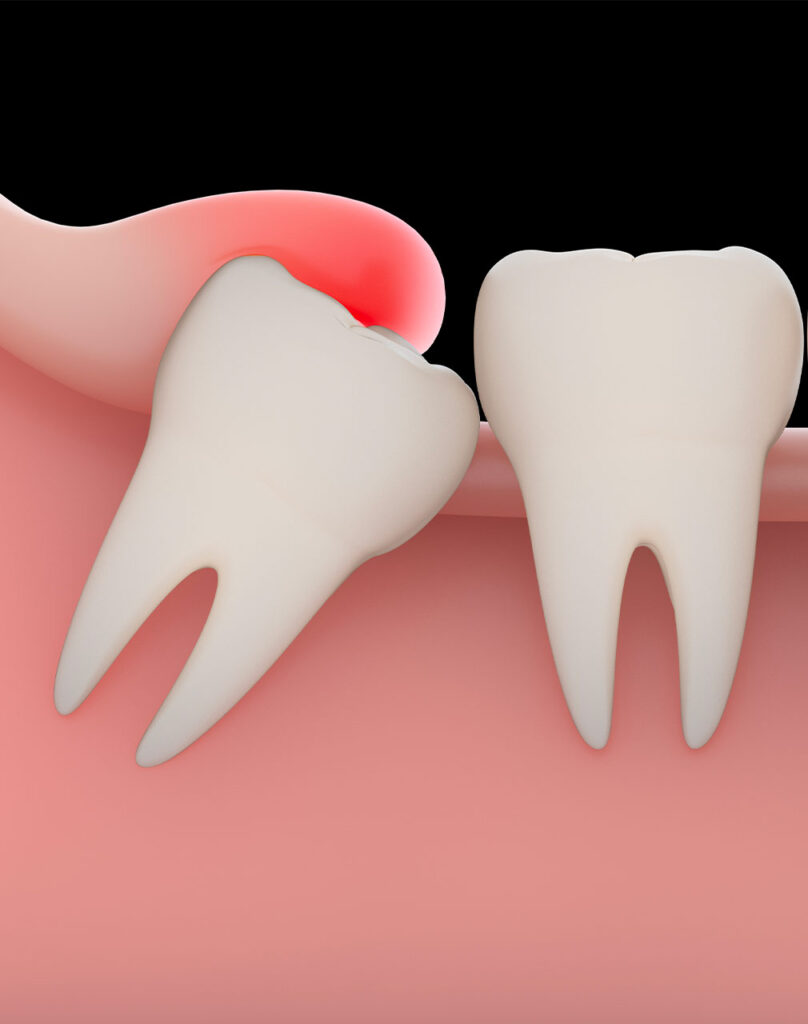
- A tooth that is impacted in the bone cannot erupt and may cause pain, infection, or abscesses.
- A poorly positioned tooth or a lack of space can cause jaw problems or shift the position of your teeth.
- A misaligned wisdom tooth can cause the roots of neighboring teeth to resorb.
- When a wisdom tooth has a cavity that can’t be repaired, extraction is recommended.
Because of where they sit, wisdom teeth can be hard to clean, which makes them prone to infection and cavities.
Here are thestepsof wisdom tooth extraction
-
Anesthesia
Before the procedure, a local anesthetic is given to numb the area around the wisdom tooth. The procedure itself is not painful.
-
Incision and extraction
The surgeon makes a small incision in the gum to reach the wisdom tooth, then frees it from the bone and removes it.
-
Stitches
If needed, the surgeon closes the gum with stitches. You’ll then receive aftercare instructions to help you heal quickly.

From fearto thechairdentistry
At Aura, we take your concerns about wisdom tooth extraction seriously. Our expertise and advanced techniques ensure a safe, comfortable procedure.



Ourfees
- Wisdom tooth extraction
- between 150.- and 450.-
- Scaling and cleaning for new patients, with two X-rays
- 155.-
- Check-up with a dentist
- between 80.- and 180.-
Frequently askedquestions
Have a question?
We’re happy to answer any questions you may have. Feel free to write to us or give us a call.
What is a wisdom tooth?

Wisdom teeth, also called third molars, are the last teeth to come in, usually between the ages of 17 and 25.
Is extraction painful?

Extraction is performed under local anesthesia, so the procedure itself is not painful. Some discomfort afterward is common and can be managed with pain medication.
Do all wisdom teeth need to be removed?

No, only the ones causing problems. Your dentist will determine whether extraction is needed based on X-rays and an oral exam.
What precautions should I take after extraction?

Get plenty of rest, avoid strenuous physical activity, stick to soft, cold foods for the first few days, and keep brushing your teeth regularly. If you develop a fever or excessive bleeding, contact your dentist.
Take care of the healthof yourteeth
We are committed to making sure no one has to give up on dental care, convinced that, in today’s world, everyone should be able to look after their health and feel good about their appearance, especially their smile. Our fees are designed to be not only competitive, but also, and above all, affordable. That said, they never compromise the quality of our service, which we want to be impeccable.
All our fees